This tenth edition marks a special milestone in our community's history. First introduced in 2015, CrowdRE has become an indispensable part of the requirements engineering landscape, shaping how we understand user feedback, the crowd as a stakeholder, and the automation of requirements elicitation and validation. We invite the community to reflect on our journey and help shape the roadmap for CrowdRE towards 2030 and beyond.
Check out the main topics: CrowdRE Ten & CrowdRE Twenty Thirty
CrowdRE has helped requirements engineering (RE) scale up to settings with thousands to millions of users of a (software) product. Online media enable stakeholders to form a large and heterogeneous group that can be denoted as a 'crowd'. The Crowd-Based Requirements Engineering paradigm integrates appropriate methods and tools for dealing with crowds in a single framework.
Since 2015, the International Workshop on Crowd-Based Requirements Engineering (CrowdRE) has been facilitating interactive discussions between scientists and representatives of industry through keynotes, interactive sessions, and paper submissions presenting novel and innovative ideas on involving the crowd and collecting, harmonizing, analyzing, and interpreting user feedback.
Retrospectively exploring the decade of CrowdRE and the state of the art we achieved to date.
CrowdRE has sensitized and shaped the field's understanding of user feedback, the crowd as a stakeholder, and the automation of requirements elicitation and validation. We encourage submissions exploring:
Prospectively discussing a roadmap for CrowdRE towards and beyond 2030.
The work on CrowdRE in the past decade provides a solid basis for the next leaps. We encourage submissions that look ahead:
The main theme of RE'26 is Sustainability and workforce transformation in the era of generative AI: How to prepare for a future in collaboration with AI tools and assistants. AI and sustainability are leading themes in the perspective of the future of CrowdRE. Framing the crowd as a workforce allows us to not only explore the impact of GenAI on the crowd, but also to allow the crowd to provide feedback and take control over how GenAI should be adapted to best meet their expectations and achieve their professional goals.
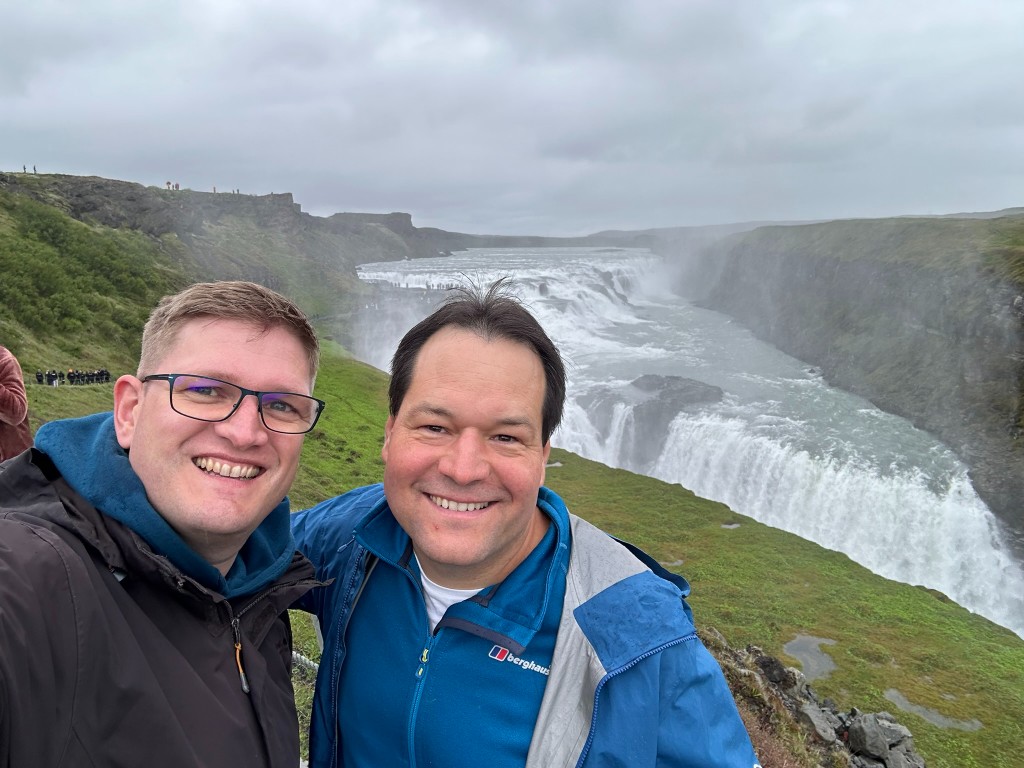
Title: CrowdRE Beyond: From User Feedback to Sustainable Autonomy
Abstract: Celebrating the milestone of the tenth CrowdRE workshop, it is time to take stock. How did we get here, and where are things headed? This keynote reflects on the evolution of Crowd-Based Requirements Engineering from its earliest conception, rooted in user feedback analysis, to its establishment as a mature framework with a dedicated research community. We retrace the development of the workshop series, and by its four building blocks – construct, data, method, and crowd – we will discuss the evolution of the CrowdRE paradigm and challenge the notion of CrowdRE. We will go beyond the obvious impact of AI by instead looking at its disruptive power in our domain, like asking: what if surging stakeholder autonomy changes everything we thought we knew about a crowd? At the same time, how could CrowdRE become key in measuring sustainability for system design and continuous software engineering, and – in turn – how does this affect the people involved, users and developers alike? We conclude with our vision on the next era of CrowdRE research and practice.
Bio Norbert: Norbert Seyff is Professor of Requirements Engineering at the University of Applied Sciences and Arts Northwestern Switzerland FHNW and a council member of IREB. End-user involvement is a central theme of his work – including the combination of user feedback and monitoring (FAME, developed in the EU project SUPERSEDE), sketch-based modeling with stakeholders (FlexiSketch), and sustainability assessment of software systems (SusAF). His current research examines how AI transforms requirements engineering. He has served the research community in roles including co-organizing six editions of the CrowdRE workshop, starting with the first in 2015; co-chairing the program committees of RE'25, ICT4S'26, and EASE'27; and co-organizing REFSQ'24 and REFSQ'27.
Bio Eddy: Eduard C. (Eddy) Groen is strategic advisor to the executive board on AI and senior requirements engineer at Fraunhofer IESE in Kaiserslautern, Germany. He also heads IREB's Special Interest Group on Sustainability (SIGsus). Eddy received his Ph.D. in Computer Science on CrowdRE from Utrecht University, in which he introduced CrowdRE as a paradigm and a framework. He has co-authored over 40 peer-reviewed papers and has served the research community in roles including co-chairing the REFSQ'20 Posters & Tools Track, the REFSQ'25 Workshops Track, and the RE'26 Industry Innovation Track; reviewing for the RE, REFSQ, CHASE, and ICT4S conferences; and co-organizing the CreaRE, CrowdRE, and AIRE workshops.
The keynote will take place in the second session between 11:00–12:30.
Find more information under the following links:
All deadlines at 23:59:59 AoE.